
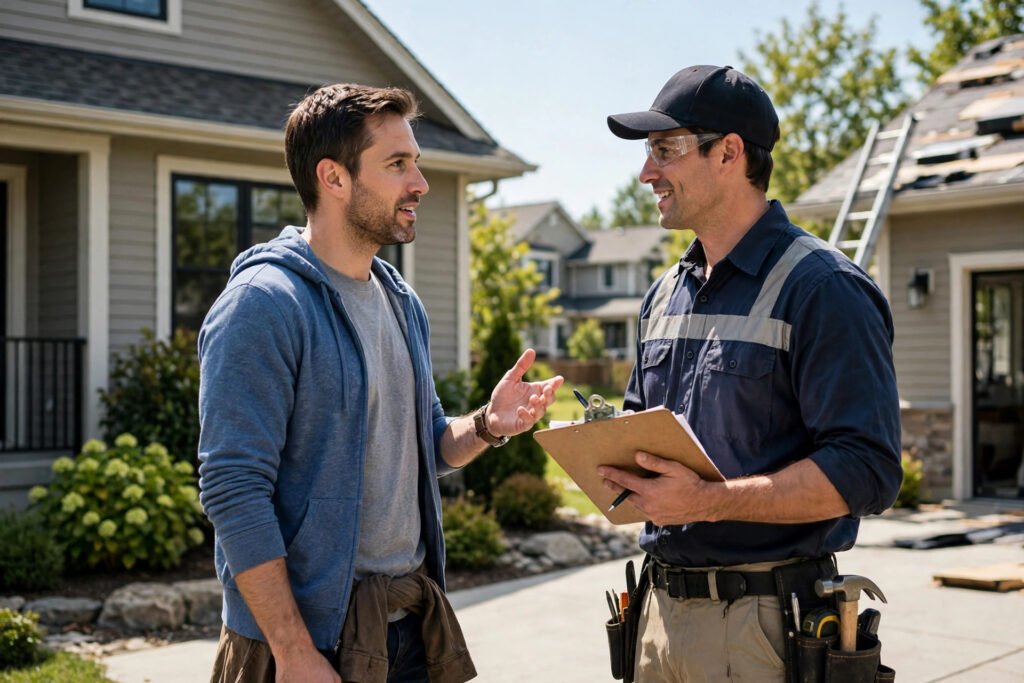
Before you sign a roofing contract, ask these ten questions: Are you licensed and insured? What exactly does the written estimate include? What warranties cover materials and workmanship? Who actually does the work — your crew or subcontractors? How are payments scheduled? A good roofer answers all of them clearly and puts the answers in writing. If you are also comparing prices, start with our roof replacement cost guide so you know what a fair quote looks like.
1. Are You Licensed and Insured — and Can I See Proof?
Ask for the company’s license number (where your state or city requires one) and certificates for both general liability insurance and workers’ compensation. Then verify the license on your state licensing board’s website and check that the insurance certificates are current. This is not distrust; it is the same check you would run on any contractor, as outlined in our 12-step checklist for hiring a contractor. If a worker without workers’ comp coverage is hurt on your roof, or an uninsured crew damages your home, the cost can land on you. A professional roofer expects the question and produces documents without hesitation.
2. Will You Tear Off the Old Roof or Roof Over It?
A full tear-off lets the crew inspect the decking, replace rotted wood, and install the new roof on a sound surface. Installing over an existing layer is cheaper, but it adds weight, can trap problems underneath, and may reduce manufacturer warranty coverage. Ask what the roofer recommends for your roof and why, how many layers are up there now, and what tear-off and disposal cost in the quote — typically $1.00 to $3.00 per square foot. If they propose a layover, get the reasoning in writing.
3. What Does the Written Estimate Actually Include?
A useful estimate is itemized, not a single lump sum. It should name the shingle brand, product line, and color; specify underlayment and ice-and-water shield (and where the shield is applied); list flashing, drip edge, vents, and starter strips; and state tear-off, disposal, and permit costs. Ask specifically about the two most common surprise charges: replacement of damaged decking (usually billed per sheet, around $75 to $120 installed) and chimney or skylight flashing. Knowing the per-sheet price before the roof is open protects you from a bad moment mid-project.
4. What Warranties Do I Get — Manufacturer and Workmanship?
These are two separate protections, and homeowners routinely confuse them:
- Manufacturer warranty covers defects in the shingles themselves. “Lifetime” shingle warranties are common but are prorated over time and cover materials, not labor, in most cases.
- Workmanship warranty is the roofer’s own guarantee on the installation — the thing that actually causes most leaks. Lengths vary from 1–2 years to 10+ years, or even lifetime from established companies.
Ask: How long is the workmanship warranty? What does it cover, exactly? Is it in writing? Is it transferable if I sell the house (a real selling point)? Also ask whether the roofer is a certified installer for the shingle brand — certification can unlock enhanced manufacturer warranties that require it.
5. Who Will Actually Be on My Roof?
Some roofing companies run their own trained crews; others sell the job and subcontract the labor to whoever is available. Neither model is automatically bad, but you deserve to know. If subcontractors are used, ask who they are, whether they carry their own insurance, and who supervises them on site. Also ask who your point of contact is during the job and how to reach them — a named project manager or foreman who is present daily is a good sign.
6. What Is the Timeline — and What Happens If Weather Intervenes?
Get a start date, an estimated duration (most asphalt roofs take 1 to 3 days of actual work), and the plan for protecting your home if rain hits mid-job with the roof open. Ask how long the current backlog is and whether your start date is firm or a guess. Also clarify working hours and whether anyone needs access inside the house or attic.
7. How Will You Protect My Property and Handle Cleanup?
Tear-off is messy: thousands of old nails and shingle debris come down. Ask what the crew does to protect landscaping, siding, windows, and your driveway; whether a dumpster or dump trailer is used and where it sits; and how nails are cleaned up — reputable crews run magnetic sweepers over the yard, driveway, and street multiple times. Get cleanup specifics in the contract, because “we’ll clean up” has ended a lot of barefoot summers badly. If you have an HOA, ask about any rules the roofer needs to follow as well.
8. What Are the Payment Terms?
Standard practice mirrors other trades: a modest deposit (often 10%, or nothing until materials are delivered with some established companies), progress payments tied to clear milestones, and a final payment only when the work is complete and you have walked the job. Never pay the full amount upfront, and be wary of anyone demanding large cash payments. Ask what forms of payment are accepted — card or check creates a paper trail. Confirm whether the quote assumes anything about decking repairs or other extras, and how change orders are priced and approved. Nothing extra should be done, or billed, without your written sign-off.
9. Do You Handle Permits and Inspections?
Most jurisdictions require a permit for a full roof replacement. The roofer should pull it in their name, include the fee in the quote, and schedule any required inspections. A roofer who proposes skipping the permit to save a few dollars is proposing that you carry the risk — including problems when you sell the home. Ask to see the permit before work starts.
10. Can You Provide Local References — and Put Everything in Writing?
Ask for two or three recent jobs in your area and call them. Ask those homeowners about communication, cleanup, whether the final bill matched the quote, and how any problems were handled. Finally, confirm the contract itself: scope, materials, timeline, payment schedule, both warranties, and permit responsibility should all be on paper. Anything promised in conversation but missing from the contract — a specific shingle, a warranty length, a start date — should be added before you sign.
If comparing bids across companies feels time-consuming, a matching service can organize local quotes for you. Run those roofers through these same ten questions before choosing.
FAQ
How many quotes should I get for a new roof?
Three itemized quotes is the practical standard. Fewer and you cannot spot an outlier; many more and the estimates blur together.
Is it a red flag if a roofer’s quote is much lower than others?
Usually. Look for what is missing — no tear-off, reused flashing, thin underlayment, no ice-and-water shield, or no workmanship warranty are the common gaps.
Should I be home during the roof replacement?
You do not need to be, but being reachable matters. The noise is considerable, so plan for pets and small children to be elsewhere during work hours if possible.
What if I find nails or debris after the crew leaves?
Call the company — good roofers return for an extra magnetic sweep without argument. This is also why final payment comes after your walkthrough, not before.
The Bottom Line
These ten questions take about fifteen minutes to ask, and the answers separate professional roofers from risky ones more reliably than any ad or star rating. Insist on proof of licensing and insurance, an itemized written estimate, clear warranty terms, and milestone-based payments. Compare at least three quotes before you hire, ask every roofer the same ten questions, and sign only when the answers are in writing.