
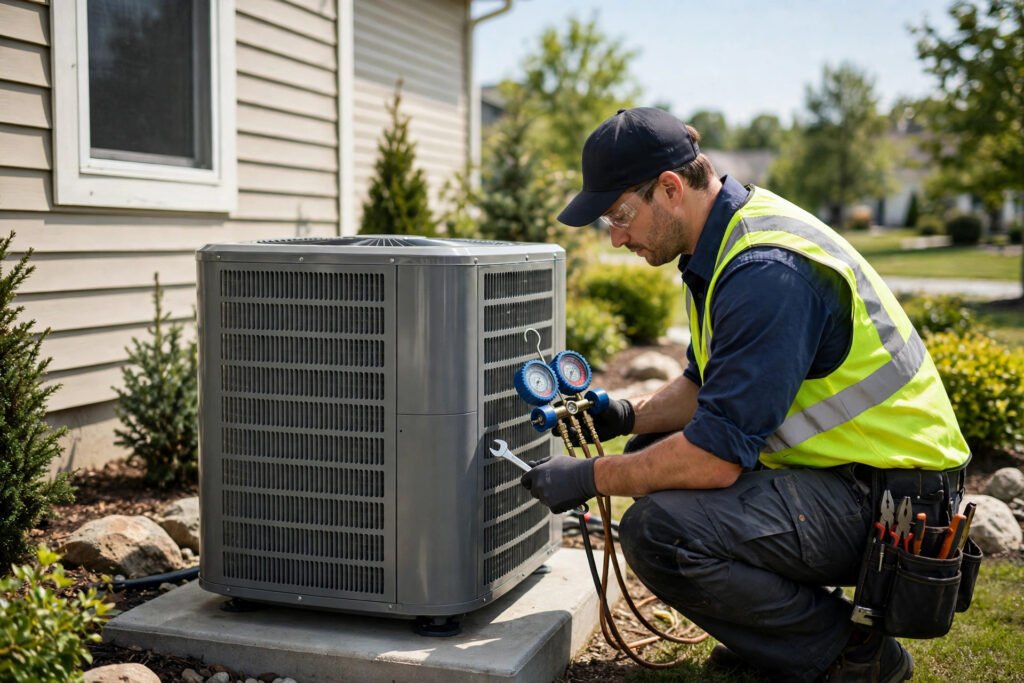
Replacing a full HVAC system in 2026 typically costs $7,500 to $16,000 for a standard furnace-and-air-conditioner setup in an average home, and $8,500 to $18,000 for a heat pump system. Straightforward change-outs using existing ductwork land at the lower end; high-efficiency equipment, duct modifications, and larger homes push costs up. These are 2025–2026 national estimates — your price will vary by region, home size, and equipment choice, and only written quotes for your home are exact.
Cost by System Type
| System type | Typical installed cost |
|---|---|
| Central AC only (coil + condenser) | $4,500 – $9,500 |
| Gas furnace only | $3,800 – $8,500 |
| Furnace + central AC (full system) | $7,500 – $16,000 |
| Air-source heat pump (with air handler) | $8,500 – $18,000 |
| Dual-fuel system (heat pump + furnace) | $11,000 – $20,000 |
| Ductless mini-split (single zone) | $3,500 – $7,500 |
| Ductless mini-split (multi-zone) | $8,000 – $20,000+ |
A “replacement” quote normally includes the new equipment, standard installation labor, a new thermostat in many cases, refrigerant line work, condensate drainage, permits, and haul-away of the old system. It does not usually include new ductwork — see below.
What Size System Do You Need? (Tonnage)
Air conditioners and heat pumps are sized in tons, where one ton equals 12,000 BTU of cooling per hour. A rough rule of thumb is one ton per 500 to 600 square feet in a moderately insulated home, but the correct method is a Manual J load calculation, which accounts for insulation, windows, ceiling height, climate, and sun exposure.
| Home size | Typical cooling size |
|---|---|
| 1,000 sq. ft. | 2 tons |
| 1,200 sq. ft. | 2 – 2.5 tons |
| 1,500 sq. ft. | 2.5 – 3 tons |
| 1,800 sq. ft. | 3 tons |
| 2,000 sq. ft. | 3 – 3.5 tons |
| 2,500 sq. ft. | 4 tons |
| 3,000 sq. ft. | 5 tons (or two systems) |
Bigger is not better. An oversized system cycles on and off in short bursts, which wears parts faster, controls humidity poorly, and leaves rooms clammy. If a contractor sizes your system purely by square footage or by matching the old unit without any calculation, ask questions — the process in our 12-step hiring checklist applies to HVAC companies too. Note that furnace sizing is separate: heating is rated in BTU output, typically 60,000 to 120,000 BTU for most homes.
Efficiency Ratings: SEER and What They Cost
Cooling efficiency is measured by SEER2 ratings. As of recent federal standards, new systems must meet minimums of roughly 13.4–14.3 SEER2 depending on region and system type, and high-efficiency models reach 20+ SEER2.
In practical terms:
- Moving from a minimum-efficiency system to a mid-range unit (15–17 SEER2) usually adds $800 to $2,500 to the installed price
- Top-tier variable-speed systems (18+ SEER2) can add $3,000 to $6,000, partly offset by lower monthly bills and better comfort
- High-efficiency gas furnaces (95–98% AFUE vs. the 80% standard) add roughly $800 to $2,000
Whether the premium pays back depends on your climate and how much you run the system. In a mild climate with light usage, a mid-efficiency system is often the value pick. In a hot climate with a long cooling season, the higher-efficiency system can pay for its premium well within its lifespan. Ask each bidder to show estimated annual operating costs for the options they quote.
Ductwork: The Cost People Forget
If your ducts are leaky, undersized, or damaged, new equipment will not perform as promised. Typical duct costs:
- Duct sealing and insulation: $1,000 – $2,500
- Partial replacement or modification: $1,500 – $4,000
- Full new duct system: $3,500 – $8,000+ depending on home size and access
A good contractor inspects the ductwork as part of the quote and tells you honestly whether it can support the new system. Budget a contingency if your home is older and ducts have never been evaluated.
Other Factors That Move the Price
- Brand and features: premium brands, variable-speed blowers, communicating thermostats, and zoning add cost but improve comfort and noise
- Installation complexity: attic or crawlspace installs, tight mechanical closets, and required electrical or gas-line upgrades add labor
- Region and season: labor rates vary widely, and replacing a system in the off-season sometimes earns better pricing than mid-summer when every company is booked out
- Permits and code updates: most jurisdictions require a permit and inspection; new disconnects, pads, or condensate safety switches may be required by current code
Getting three itemized quotes is the only reliable way to see your local market. A matching service can line up local HVAC companies to bid.
Rebates and Tax Credits
Federal incentives, utility rebates, and state programs for high-efficiency equipment and heat pumps have changed frequently in recent years, and amounts vary widely by location and equipment. In many areas, qualifying heat pumps and high-efficiency systems can attract anywhere from a few hundred to several thousand dollars in combined incentives. Because rules change, treat any single number you read online — including in older articles — with caution: verify current federal credits before you buy, and ask your utility and each bidding contractor what local rebates the quoted equipment qualifies for. Getting this right can change which system is the best value, so settle it before you sign, not after installation.
How Long Does an HVAC System Last?
- Central air conditioner: 12–17 years
- Heat pump: 12–16 years (it works year-round)
- Gas furnace: 18–25 years
- Ductless mini-split: 15–20 years
Replacement usually beats repair when the system is past about 12–15 years, needs a repair costing more than roughly a third of replacement, uses phased-out refrigerant, or has rising bills and uneven temperatures. Annual maintenance — filters, coil cleaning, and a professional tune-up — is the cheapest way to reach the top of those lifespan ranges. For related hiring and pricing guidance, see our plumber cost guide if your project also involves plumbing work such as a condensate or gas line.
FAQ
How long does HVAC replacement take?
A like-for-like system change-out usually takes 1 to 2 days. Ductwork changes, zoning, or a furnace-plus-AC conversion can extend the job to 3–5 days.
Should I replace the furnace and AC at the same time?
Usually yes if both are older. Matched systems are designed to work together, share labor in one visit, and start warranties together. Replacing only the failed half can cost more over time.
What SEER rating should I buy?
Meet your regional minimum, then compare the payback of mid-efficiency (15–17 SEER2) against your actual usage. Heavy users in hot climates benefit most from higher ratings.
Can I install a system I buy online myself?
Full HVAC installation requires refrigerant handling certification, permits, and inspections in most jurisdictions, and self-installed equipment often carries no manufacturer warranty. This is professional work.
The Bottom Line
For most homes, a 2026 HVAC replacement lands between $7,500 and $18,000 depending on system type and efficiency, with ductwork and complexity as the main wildcards. Get a proper load calculation, compare itemized quotes at two efficiency levels, and verify rebates before deciding. Compare at least three quotes before you hire, and choose based on the contractor’s sizing process and warranty — not just the lowest number.