
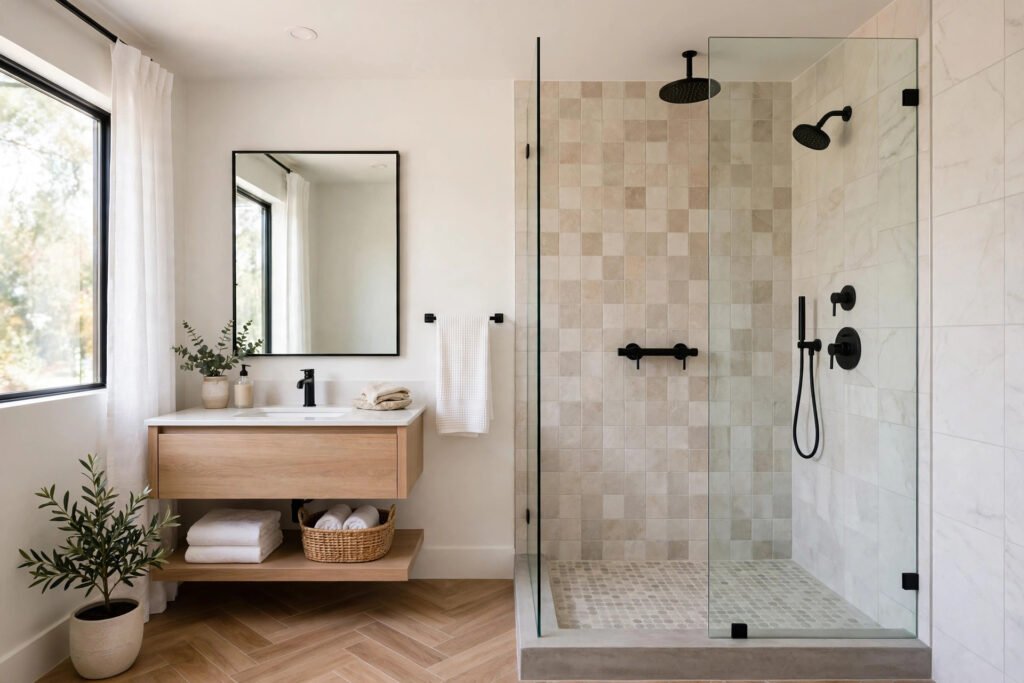
A bathroom remodel in 2026 typically costs $6,500 to $25,000 for a standard full bath, with small powder rooms starting around $3,000 to $8,000 and luxury primary baths running $25,000 to $60,000+. Size is the biggest cost driver, but plumbing moves and fixture quality matter nearly as much. All figures here are estimates based on 2025–2026 national ranges — they vary by region, home age, materials, and contractor, and only a written quote for your bathroom is exact.
Bathroom Remodel Cost by Size
| Bathroom type | Typical cost | What drives it |
|---|---|---|
| Powder room (half bath) | $3,000 – $8,000 | Vanity, toilet, mirror, flooring, paint — no tub or shower |
| Hall / guest bath (full, small) | $8,000 – $18,000 | Tub/shower combo, vanity, tile, fixtures, lighting |
| Primary bath (full, larger) | $15,000 – $35,000 | Walk-in shower, double vanity, quality tile, better fixtures |
| Luxury primary bath | $25,000 – $60,000+ | Freestanding tub, curbless shower, custom vanities, heated floors, high-end stone |
A powder room is the cheapest remodel in the house and one of the best returns per dollar — new vanity, mirror, and flooring can transform it in a week. A hall bath is the workhorse remodel: replace the tub/shower, vanity, and tile, and it looks new for a decade. The primary bath is where budgets climb, because it is where homeowners add the walk-in shower, the second sink, and the finishes they will use every morning. For the bigger picture on hiring for any remodel, see the hiring checklist before you sign anything.
Cost Breakdown by Component
For a typical full-bath remodel, the money splits roughly like this:
| Component | Typical range |
|---|---|
| Tub and/or shower (fixtures + install) | $1,500 – $8,000 |
| Tile (floor + shower walls, material + labor) | $2,000 – $7,000 |
| Vanity and countertop | $800 – $5,000 |
| Toilet | $250 – $800 |
| Faucets, showerhead, hardware | $400 – $2,000 |
| Plumbing labor (rough-in + finish) | $1,500 – $5,000 |
| Electrical (lighting, vent fan, GFCI) | $800 – $3,000 |
| Labor (demo, carpentry, drywall, paint) | $3,000 – $10,000 |
| Permits and contingency | $500 – $3,000 |
Plumbing is the hidden cost multiplier. Keeping the toilet, tub, and vanity in their current locations saves thousands — moving a toilet or shower drain means cutting the floor, rerouting pipes, and often triggering code updates. If your project also touches drains, supply lines, or a water heater relocation, check our guide to plumber costs so you know what fair plumbing pricing looks like before the remodeler quotes it.
Wet-Room and Shower Conversion Costs
Two popular upgrades have their own price tags:
- Tub-to-shower conversion: $5,000 – $12,000 for a standard walk-in shower with tile, glass door, and new fixtures. A curbless (zero-threshold) shower adds $1,000 – $3,000 for the floor work and drainage.
- Full wet room: $10,000 – $25,000, depending on size and finishes. The whole room is waterproofed and tanked, so drainage, slope, and waterproofing details matter more than tile choice — this is not a job for a budget bidder.
- Freestanding soaking tub: $1,500 – $6,000 for the tub itself, plus $500 – $2,000 for plumbing and floor reinforcement if needed.
Waterproofing is the one place never to cut corners. A shower that leaks into the framing below can cause five-figure damage before anyone notices. Ask any bidder how they waterproof — membrane systems and proper sloping are the answer you want, not “we use good grout.”
What About ROI?
A midrange bathroom remodel typically recovers roughly 55–70% of its cost at resale, and a small bath refresh can recover even more per dollar spent. But the best bathroom remodels are the ones you live with: a dated, leaking, or cramped bath costs you every day in frustration and potential water damage. Remodel for your use first, resale second — and keep receipts and permits, which help at sale time.
Red Flags on Low Quotes
A bathroom quote far below the others usually means something is missing. Watch for:
- No waterproofing line item — the most dangerous omission in a bathroom bid
- No permit included — plumbing and electrical changes need permits in most jurisdictions
- “We reuse your existing plumbing” with no inspection of its condition — old cast iron or galvanized lines may fail soon after the new tile goes in
- Allowance-only pricing — fixtures listed as “$500 allowance” instead of named products, which becomes a change-order machine
- Cash-only, no contract, no license — the classic trio; walk away
If a quote feels too good, ask the bidder to itemize materials by brand and model and to name the waterproofing system. The answers (or lack of them) tell you everything. And if you are comparing several remodelers, a matching service can generate local options — then vet every one of them with the same checklist.
How Long Does a Bathroom Remodel Take?
A powder room takes 1–2 weeks. A standard full bath takes 3–6 weeks; a luxury primary bath with custom tile and fixtures can take 6–10 weeks, mostly waiting on material lead times. Tile work is the slowest honest trade in the room — a good tiler is methodical, and rushing tile is how you get lippage and leaks. Plan for one working bathroom if you have a second; if this is your only bath, budget for the inconvenience (and possibly a short stay elsewhere during the roughest days).
FAQ
What is the cheapest way to remodel a bathroom?
Keep the layout, reglaze or replace only the worst fixtures, paint the vanity, swap hardware and lighting, and choose large-format tile to cut labor. A $5,000–$8,000 refresh can look like a $15,000 job.
Do I need a permit for a bathroom remodel?
Yes, for plumbing moves, electrical changes, and structural work. Cosmetic updates like painting and fixture swaps in the same location usually do not. Your contractor should pull the permit in their name.
Is it cheaper to keep the tub?
Usually yes — a tub-to-shower conversion is a major cost. But if nobody in the household uses the tub, a walk-in shower adds daily value and can help resale in markets where buyers prefer showers.
Should the shower or the vanity get the bigger budget?
The shower. It is the most used, most waterproofed, and most expensive to fix later. Spend on the shower system and tile installation; save on the mirror and accessories.
The Bottom Line
Budget $6,500 to $25,000 for a standard bathroom remodel in 2026, keep the plumbing where it is if you can, never skip waterproofing, and get three itemized quotes in writing. The cheapest bathroom bid is rarely the cheapest outcome — water damage from a bad shower install costs far more than the savings. Compare at least three quotes before you hire, ask every bidder the same questions, and sign only when the scope, materials, and warranty are on paper.