
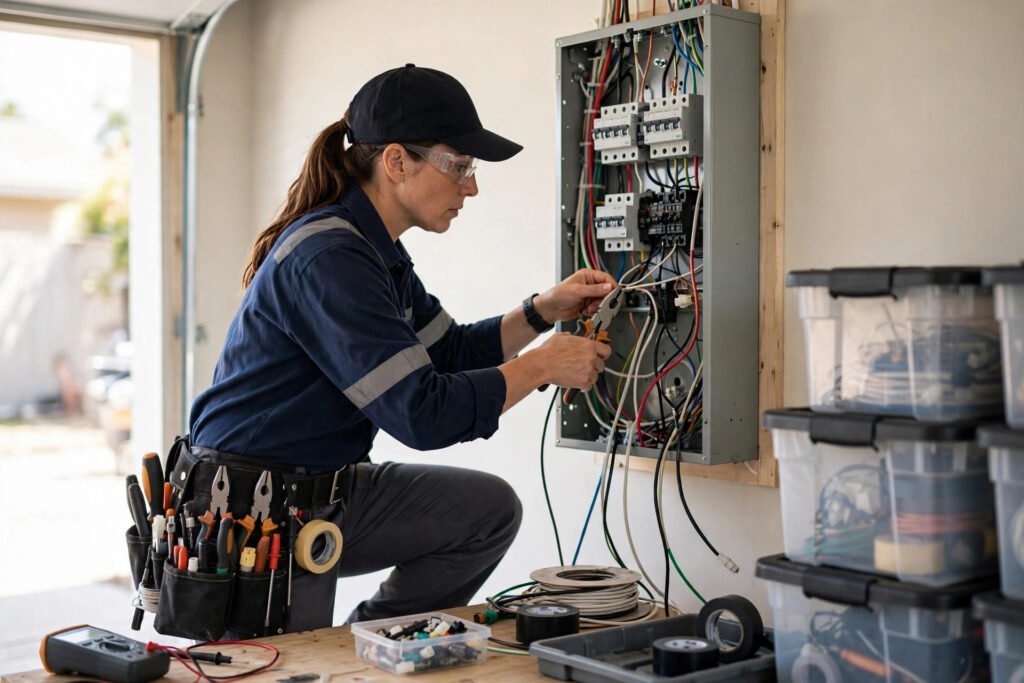
In 2026, most US electricians charge $60 to $130 per hour, with a national average around $80 to $100 per hour for a licensed journeyman during regular business hours. Master electricians and high-cost metro areas run higher, and most jobs are quoted flat-rate once the electrician has seen the work. Every figure here is an estimate based on 2025–2026 national ranges — prices vary by region, job complexity, and company, and only a written quote for your home is exact.
Electrician Hourly Rates Explained
| Electrician type | Typical hourly rate |
|---|---|
| Apprentice / helper | $40 – $70 |
| Licensed journeyman electrician | $60 – $130 |
| Master electrician | $100 – $180+ |
| Large franchise company (any level) | $90 – $150 |
You are paying for licensed expertise, not just time. Electrical work done wrong can burn a house down, so the rate covers licensing, insurance, code knowledge, testing equipment, and the experience to diagnose a fault correctly. A master electrician who finds a bad connection in 30 minutes is cheaper than a low hourly rate billed for a day of guessing. For context on how trades price differently, our guide to plumber costs shows a similar pattern in plumbing — the diagnostic skill is the value.
Trip Fees and Minimums
Expect a service-call or trip fee of $50 to $150, and a one-hour minimum even for a 10-minute fix. Many companies quote flat rates from a price book instead: one price for the whole job, agreed before work starts. Flat rate protects you if a job runs long; hourly can be cheaper for genuinely simple work. Ask which model applies before booking, whether the trip fee is credited toward the repair, and what the after-hours premium is — nights, weekends, and holidays typically run 1.5x to 2x the standard rate.
Common Electrical Job Prices
| Job | Typical total cost (2026 estimate) |
|---|---|
| Install a ceiling fan (with existing wiring) | $150 – $400 |
| Install a new outlet or switch | $150 – $350 |
| Install a light fixture / chandelier | $150 – $500 |
| Replace a circuit breaker | $200 – $400 |
| Install a GFCI outlet | $150 – $300 |
| Whole-house surge protection | $300 – $700 |
| Install a dedicated circuit (e.g., EV charger) | $500 – $1,500 |
| EV charger circuit + charger install | $1,000 – $2,500 |
| Upgrade electrical panel (100A → 200A) | $1,500 – $4,000 |
| Rewire a room | $1,500 – $4,000 |
| Whole-house rewiring (2,000 sq. ft. home) | $8,000 – $20,000+ |
| Install recessed lighting (per fixture) | $150 – $350 |
| Install an exhaust fan | $200 – $500 |
Panel upgrades are the big-ticket item most homeowners underestimate. A 200-amp panel upgrade is not just a new box — it often includes a new meter, grounding, and bringing circuits up to current code. If your panel is a known problem brand, is over 30 years old, or trips constantly, get it evaluated before it becomes an emergency. And if your project involves both electrical and plumbing — a new water heater circuit, for example — the same vetting rules apply: see the hiring checklist for the 12 steps that protect you on any hire.
When a Job Legally Needs a Licensed Electrician
Rules vary by state and city, but in general:
- Licensed electrician required: panel upgrades, new circuits, rewiring, service changes, EV charger circuits, anything in the main panel, and most permitted work
- Often allowed for homeowners (check local rules): swapping a like-for-like light fixture or switch plate, replacing an outlet cover — and even these are restricted in some jurisdictions
- Never DIY: anything inside the main panel, aluminum wiring repairs, knob-and-tube work, or work in a home you plan to sell soon without a permit
Unpermitted electrical work is a serious liability: it can void homeowners insurance, fail a home inspection at sale time, and create real fire risk. A contractor who offers to “skip the permit to save money” is asking you to carry that risk — say no.
Permits, Inspections, and Safety Notes
Most panel work, new circuits, and rewiring require a permit and an inspection. Your electrician should pull the permit in their name and include the fee in the quote. Before work starts, ask:
- Is the electrician licensed in this state/city, and can I verify it online?
- Is the company insured — general liability and workers’ comp?
- Will you pull the permit, and is the inspection included?
- Is the work guaranteed in writing, and for how long?
Also ask what happens to drywall: running new wire often means cutting and patching walls. Some electricians include patching; others leave it to you. Get it in writing either way.
How to Avoid Overpaying
- Describe the job precisely — photos of the panel and the work area help the electrician quote accurately.
- Ask for flat-rate pricing on defined jobs so the price is agreed before work starts.
- Bundle small jobs — while the electrician is already on site, adding a second outlet or fixture is far cheaper than a separate trip.
- Get the quote in writing, itemized: parts, labor, permit, and warranty.
- Don’t authorize open-ended troubleshooting without a cap — agree on a diagnosis fee and a decision point.
- Check the license yourself on your state licensing board’s website, and call references for larger jobs.
If you need several local electricians to bid, a matching service can line them up. Vet every candidate the same way — license, insurance, written quote, permit in their name.
FAQ
How much does it cost to replace an electrical panel?
A 100-amp to 200-amp panel upgrade typically costs $1,500 to $4,000 installed, including the panel, breakers, grounding, and permit. Older homes needing a service-line upgrade can cost more.
Why do electricians charge a trip fee?
The fee covers travel, diagnosis time, and the stocked truck. Many companies credit it toward the repair if you approve the work — ask before booking.
Can a handyman do electrical work?
In most states, no — beyond the most trivial tasks, electrical work requires a licensed electrician. A handyman who offers to rewire a room or upgrade a panel is a red flag, not a bargain.
How long does a panel upgrade take?
Usually one full day, with power off for several hours. Your electrician should schedule the utility shutoff and inspection in advance and tell you exactly when power will be out.
The Bottom Line
Plan on $60 to $130 per hour for a licensed electrician in 2026, plus a trip fee, and use the job table above to sanity-check any flat-rate quote. Electrical work is the one trade where a cheap, unlicensed shortcut can cost you your home — so verify the license, insist on a permit, and get the scope in writing. Compare at least three quotes before you hire, ask every electrician the same questions, and choose based on licensing, warranty, and references — not just the lowest number.