
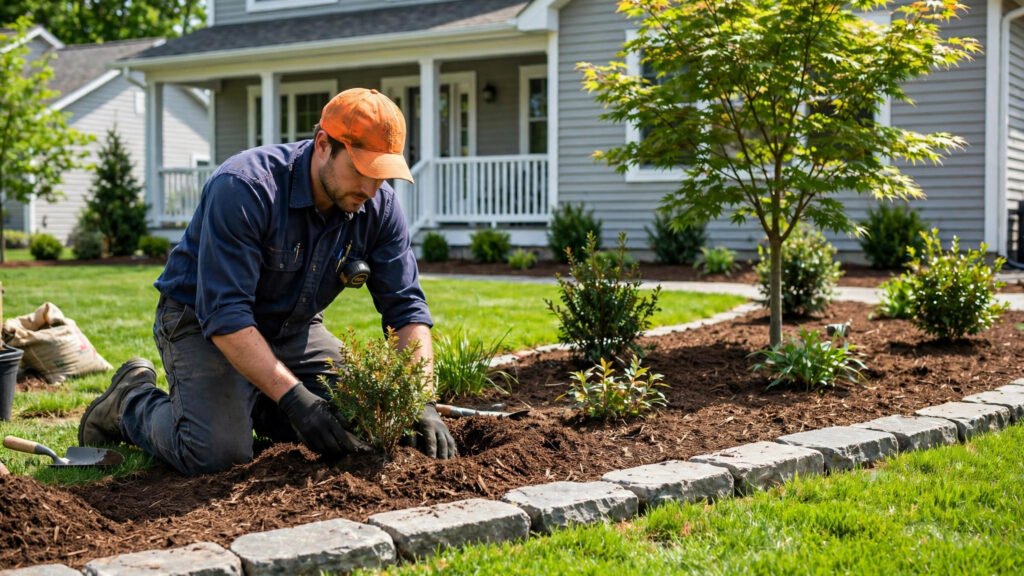
If your yard is overgrown, patchy, or still builder-grade dirt and sod, your landscaping cost is probably the first number you want — before you call anyone for a quote. In 2026, most homeowners pay $3,000 to $15,000 for a professional front- or back-yard landscaping project, with a full-yard makeover commonly landing between $10,000 and $30,000 or more. A simple cleanup and fresh planting beds can cost as little as $800–$2,500, while a designed landscape with new lawn, trees, irrigation, lighting, and stonework can reach $40,000–$75,000+. This guide breaks down what landscaping actually costs per project, per hour, and per square foot, what a complete quote should include, and how to tell a fair bid from one that quietly leaves out the soil prep, plants, and cleanup you will end up paying for anyway.
The quick answer
Landscaping cost comes down to four things: how much of the yard is being changed, whether you are paying for a design as well as installation, the plants and materials you choose, and how much grading, hauling, and prep work the site needs first. A flat suburban yard getting new beds, shrubs, mulch, and sod is the cheapest common job. A sloped yard that needs grading, drainage, retaining edges, large trees, and an irrigation system costs several times as much — and sometimes that extra spend is justified by fixing a real drainage or erosion problem, and sometimes it is pure upsell.
| Project | Typical installed cost (2026) |
|---|---|
| Landscaping, full yard (average project) | $3,000 – $15,000 |
| Front yard landscaping | $2,500 – $10,000 |
| Back yard landscaping | $4,000 – $20,000 |
| Landscape design only (plan, no install) | $300 – $2,500 |
| New lawn — sod installation, per sq ft | $1.00 – $2.50 |
| New lawn — seeding, per sq ft | $0.15 – $0.45 |
| Planting beds with shrubs and mulch, per sq ft | $4 – $12 |
| Tree planting, per tree (installed) | $300 – $1,500 |
| Yard cleanup (one-time) | $300 – $1,200 |
| Monthly maintenance service | $100 – $400 per month |
Want a ballpark for your whole project before you talk to a landscaper? Run your numbers through our free Project Cost Calculator — enter your project size and scope, and you’ll get a realistic low–high range in seconds to bring to every quote appointment.
Costs in this guide are national ranges for planning purposes. Your local quotes will vary by region, materials, yard size, and scope — always get at least three written bids on the same scope before you hire.
Landscaping cost per project, per hour, and per square foot
Landscaping is confusing because companies quote it three different ways. Understanding all three stops you comparing a per-hour labor rate with a flat per-project bid — they are not the same job.
Per project is how most homeowners actually budget. A front-yard refresh — new beds, a dozen shrubs, fresh mulch, edging, and a few ornamental plantings — usually lands at $2,500–$10,000. A back-yard project adds lawn area, privacy planting, and often a patio edge or walkway, which is why it commonly runs $4,000–$20,000. Full-property makeovers with design, grading, irrigation, and lighting are a different budget class entirely: $15,000–$50,000+ is normal, and large or high-end properties go well beyond that.
Per hour matters for cleanups, maintenance, and small planting jobs. Landscaping labor typically runs $50 to $100 per hour per crew member, with a two- or three-person crew billed at $100–$300 per hour in total. A licensed landscape designer or architect charges more — commonly $75–$200 per hour — because you are paying for the plan, not the shovel work. Ask whether an hourly quote has a minimum visit charge; most do, usually two to four hours.
Per square foot helps you sanity-check lawn and bed work. Sod installed usually runs $1.00–$2.50 per square foot including prep; seeding is far cheaper at $0.15–$0.45 per square foot but takes a season or two to look established and needs disciplined watering. Finished planting beds — soil amendment, plants, mulch, and edging — commonly land at $4–$12 per square foot, with the plant selection doing most of the damage to the budget: a bed of one-gallon perennials and a bed of mature specimen shrubs can differ by a factor of five for the same footprint.
| Common add-on | Typical cost (2026) |
|---|---|
| Sprinkler / drip irrigation system | $2,500 – $6,500 |
| Landscape lighting (10–20 fixtures) | $2,000 – $6,000 |
| French drain, per linear foot | $20 – $60 |
| Stone or steel bed edging, per linear foot | $5 – $25 |
| Mulch delivery and install, per cubic yard | $80 – $180 |
| Large shade tree, planted (2–3 in. caliper) | $800 – $2,500 |
| Grading / leveling, per project | $1,000 – $4,500 |
| Sod removal and disposal, per sq ft | $0.50 – $1.50 |
What a complete quote should include
Landscaping quotes are where line items quietly disappear — a low total that excludes the prep and plants that make a yard actually look finished. A complete written quote should spell out:
- A named plant list: species, size (one-gallon, five-gallon, balled-and-burlapped), and quantity for every plant — named in writing, not “assorted shrubs.” Plant size is the easiest place to shave a bid, and the difference shows up the day the truck arrives.
- Site prep: clearing, weed and old-sod removal, grading, and hauling away debris — stated as included or priced separately. Removing old sod and brush typically adds $0.50–$1.50 per square foot, and disposal fees are real.
- Soil work: whether topsoil, compost, or soil amendment is included and how much. Planting into unamended builder fill is why new landscapes struggle; a good quote names the soil plan.
- Bed definition: edging type (steel, stone, plastic, or a cut natural edge), mulch type and depth (2–3 inches is standard), and whether weed-barrier fabric is used — and where it is not, because fabric under mulch in planted beds is a long-term maintenance argument you should have before, not after.
- Irrigation: whether new planting is tied into existing irrigation, a new zone is added, or watering is on you. New plants without a watering plan are a warranty claim waiting to happen.
- Plant warranty: how long plants are guaranteed (one growing season is a fair ask) and what voids it — usually lack of watering, which is why the watering plan above matters.
- Timeline and phases: what gets done in what order — grading and drainage before planting, planting before mulch — and realistic start and finish windows in the season you are booking.
- Cleanup: who hauls away soil, sod, brush, and packaging, and whether lawn areas damaged by equipment get repaired or reseeded.
- Payment schedule: a modest deposit is normal on larger jobs, with progress payments tied to completed phases; a demand for most of the money up front is not.
If a quote is just a total with none of this in writing, do not sign it. Compare it against at least two other itemized bids on the same plant list, sizes, and scope, and use our 12-step contractor hiring checklist to verify licenses, insurance, and references before you choose.
Design, installation, and maintenance are three different purchases
Homeowners often shop for “landscaping” as if it were one service. It is three, and knowing which one you are buying prevents the most common budget surprise in this trade.
Landscape design ($300–$2,500) buys you a plan: plant selection matched to your sun, soil, and climate zone, bed shapes, and a phased install list. A simple designer plan for one yard area sits at the low end; a full-property plan from a landscape architect, with hardscape drawings and permit-ready details, sits at the high end. Some design-build firms credit the design fee toward installation if you hire them to build it — ask, in writing.
Installation is the build: prep, grading, planting, sod, irrigation, and mulch. This is where most of the money goes, and where the itemized quote above matters most. Installation quality is mostly invisible on day one — soil prep, correct planting depth, and proper grading decide whether the yard thrives or declines over the next three years.
Maintenance ($100–$400 per month) is mowing, trimming, seasonal cleanup, mulch refresh, pruning, and fertilization on a recurring plan. A landscape you cannot maintain will outgrow its design in two seasons, so budget honestly: either the maintenance plan, or your own weekends. Many installers offer a first-year maintenance discount precisely because they know this — a well-maintained install is their best advertisement, much like the tidy finishing work a good handyman leaves behind on interior projects.
What drives the price up (or down)
- Yard size and access. More square feet is more of everything — but access matters just as much. A back yard with a wide gate that fits a mini loader is cheaper to work than the same yard where every wheelbarrow load comes through a 36-inch side gate by hand.
- Slope and drainage. Flat yards are cheap yards. Slopes need grading, erosion control, and sometimes terracing or drainage work at $20–$60 per linear foot for a French drain. Fixing drainage is unglamorous and worth every dollar: water against a foundation costs far more later, the same way ignored exterior water costs show up in a gutter installation or roof repair bill.
- Plant size and maturity. You are buying time. A five-gallon shrub costs two to three times a one-gallon shrub of the same species, and a large-caliper tree can cost ten times a small one — because you are paying for the years the nursery spent growing it. Patient homeowners plant small and save thousands.
- Existing landscape removal. Tearing out overgrown shrubs, old beds, stumps, and tired sod is slow, heavy work with real disposal costs. Confirm removal and hauling in writing.
- Soil condition. Rocky, compacted, or rubble-filled soil — common in newer subdivisions — needs amendment or replacement before anything will thrive. A contractor who pokes the soil before quoting is a good sign.
- Hardscape creep. The walkway, patio extension, fire-pit pad, and stone border are often quoted alongside landscaping but priced like the masonry work they are — a concrete or paver project wearing a landscaping hat. Get them itemized separately so you can phase them.
- Region and season. Labor in high-cost metros can run 20–35% above national averages. Spring is peak season — crews book out weeks ahead and prices firm up; late summer and fall planting (excellent for trees and shrubs in most climates) is sometimes easier to schedule.
- Bundling with exterior projects. If you are already planning exterior painting, sequence landscaping after the painters and ladders are gone, so fresh beds and mulch are not trampled and oversprayed — coordination saves rework even when it does not save line-item dollars.
DIY vs. hiring a pro: an honest split
Reasonable DIY: mulch refresh, small perennial beds, planting one-gallon shrubs and perennials from a good plan, seeding a small lawn area, and routine maintenance. The tools are cheap, mistakes are fixable, and the labor savings are real.
Hire a pro for: grading and anything that moves water, large tree planting and removal, irrigation installation (which involves plumbing, backflow rules, and sometimes permits), sod over a large area (it is perishable and brutally heavy — a failed DIY sod weekend costs more than the install quote), and any design for a full-property makeover. A common middle path: pay for the design and the heavy prep, then do the planting yourself from the plan over a season or two. Ask installers about that split before you assume it is all-or-nothing — many will happily sell design plus prep as phase one.
How long does landscaping take — and how long does it last?
A cleanup and bed refresh is one to two days. A front-yard install is typically three to seven working days. A full-yard makeover with grading, irrigation, and lighting runs two to four weeks, weather permitting. The landscape itself then takes one to three growing seasons to fill in and look like the photo in the plan — plants are sold at install size, not mature size, and any quote that promises an instantly mature yard is pricing mature plants, which you will see in the plant list if you read it.
A well-built landscape is a long-lived asset with recurring costs: mulch refreshes every one to two years, pruning on a cycle, irrigation checks each spring, and plant replacements as things age out. Budget roughly 5–10% of the install cost per year in maintenance (yours or a service’s) and the yard holds its value; skip it, and a $15,000 install can look tired in three years.
Frequently asked questions
How much does landscaping cost for an average yard?
Most homeowners pay $3,000–$15,000 for a professional project covering a front or back yard, with full-property makeovers at $10,000–$30,000+. The biggest drivers are yard size, plant size and count, and whether grading, irrigation, or drainage work is included. Run your exact scope through our Project Cost Calculator for a tighter range before you collect bids.
How much do landscapers charge per hour?
Landscaping labor typically runs $50–$100 per hour per crew member, with full crews billed at $100–$300 per hour and usually a two- to four-hour minimum. Designers and landscape architects charge $75–$200 per hour. Hourly billing suits cleanups, maintenance, and small planting jobs; fixed bids suit defined install projects.
Is fall a good time to landscape?
In most US climates, yes — especially for trees, shrubs, and perennials. Cooler air and warm soil encourage root growth, crews are less booked than in spring, and new plantings need less watering. Sod and seed also establish well in early fall in cool-season grass regions. Spring remains best for warm-season grasses in the South.
Do I need a permit for landscaping?
Planting, beds, mulch, and lawn work usually need no permit. Retaining walls above a certain height (often 3–4 feet, varies by city), significant grading that changes drainage onto a neighbor’s property, irrigation backflow devices, and work in easements or HOA-governed front yards often do need approval. Your contractor should know the local rules and name who handles any permit or HOA submission in the contract.
Why is one landscaping quote double another for the same yard?
Usually plant size, whether removal and hauling are included, whether soil amendment and irrigation are in the price, and whether a real design is part of the bid. Line the bids up item by item — plant list with sizes, prep, soil, edging, mulch depth, warranty — before you decide the expensive one is overpriced or the cheap one is a bargain.
How do I avoid landscaping scams and low-quality installs?
Get the plant list and sizes in writing, pay by completed phases rather than mostly up front, and verify insurance before work starts. Be wary of the classic pressure patterns — a quote far below every other bid, a “today only” discount, or a crew that happens to be “in the neighborhood with leftover materials.” Those are textbook examples in our guide to contractor scams and red flags.
Prices are national averages for planning purposes; your local quotes will vary by region, materials, and scope. Always get at least three written bids on the same scope before you hire.