
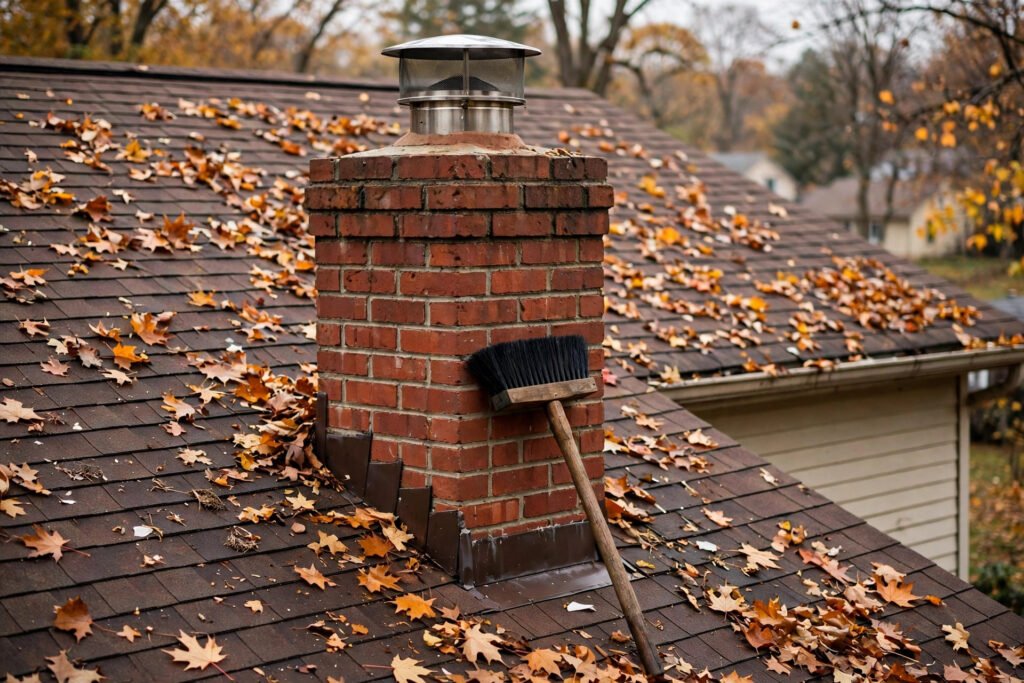
Chimney Repair Cost: What You Can Fix Yourself and What Needs a Pro
Light the first fire of the season and the house tells you quickly whether the chimney is ready. Smoke that hesitates, spills back into the room, or carries a sharp, stale smell is not a quirk to live with — it is information. Your chimney repair cost is decided in that first ten minutes more honestly than by any photo of the roofline: a chimney that drafts cleanly and was swept last year usually needs maintenance money, while one that has gone seasons without a sweep, leaks at the flashing, or sheds mortar from its joints needs a certified sweep’s inspection before anyone quotes a repair. That order matters, because chimney work has the clearest DIY line in the whole house — a few tasks are genuinely yours, and everything past that line involves fire, carbon monoxide, and a flue you cannot see inside.
This guide is built around that line. It starts with the smoke test and the jobs a careful homeowner can honestly do, then names the jobs that belong to a pro and why, then prices both sides — DIY materials on one table, professional chimney repair cost on another — so you can see where your money actually goes. No contractor is invented here and no repair is promised to fix a chimney unseen: costs vary by region, materials, and scope, flue condition is only known after a camera inspection, and any figure below is a 2026 national planning range, not a quote.
The ten-minute smoke test: read the chimney before you price it
Do this on a calm day before the heating season gets serious, and write down what you see. You are not diagnosing — you are sorting the chimney into “maintenance,” “inspect soon,” or “do not use until inspected.”
What a healthy chimney does
A cold flue needs a minute to establish draft. Light a small, dry fire or even a rolled newspaper torch held near the damper: smoke should pull steadily up, the room should stay clear, and once the fire is going you should not smell smoke upstairs or in rooms along the chimney chase. Outside, the cap should be present and seated, the crown (the concrete or metal top surface) should not show open cracks you can see from the ground with binoculars, and the brickwork should not be shedding sand-like mortar when you rub a joint at ground level.
The stop-and-call signs
Stop using the fireplace and book a professional inspection first if you notice any of these:
- Smoke spilling into the room after the flue has warmed, or smoke appearing in an upstairs room — a possible blockage, a damaged flue, or a second flue problem.
- A strong creosote or campfire smell in summer from the fireplace opening, which often means heavy creosote deposits or moisture in the system.
- White staining (efflorescence), rust on the damper or firebox, or water in the firebox after rain — water is entering somewhere, and water is what turns a cheap flashing or crown fix into structural masonry work.
- Cracked, leaning, or spalling brick — faces of brick popping off — or mortar joints recessed more than about an inch.
- Animals, nesting material, or a missing cap. A blocked flue is a carbon-monoxide risk, not a nuisance.
Any one of these moves the job out of DIY territory entirely. The inspection itself is the product you are buying first, and it is priced in the pro table below.
The DIY side: four jobs that are genuinely yours
These are maintenance jobs on the accessible, non-flue parts of the system. They are cheap in materials, honest in scope, and — done yearly — they are what keeps the expensive table further down this page from applying to you.
1. Cleaning the firebox and ash
Once ashes are completely cold (allow several days), shovel them into a metal container with a lid and store it outside, away from the house. Vacuum the firebox with a shop vacuum only after the bulk is out and everything is cold. Cost: essentially the container, roughly $20–$40 if you need one. This is also your chance to look at the firebox brick and refractory panels: hairline cracks in panels are a monitor item; cracked-through panels or crumbling firebrick are a pro repair, because the firebox contains the fire.
2. Replacing a cap you can safely reach — and knowing when you can’t
A basic stainless chimney cap commonly runs $50–$150 in materials, and on a single-story, low-slope roof with safe access it can be a homeowner job: measure the flue tile carefully, seat the cap, and fasten it as the maker directs. The honest limit is the roof, not the cap. Steep pitch, two stories, tile or metal roofing, or any doubt about footing moves this to the pro column — a fall costs more than every figure in this article combined. Many homeowners reasonably decide the cap belongs with the sweep visit anyway, since the sweep is already up there; the bundled logic is the same one that makes a list of small jobs cheaper in our handyman cost guide and its hourly breakdown in handyman cost per hour.
3. Sealing the crown’s hairline cracks (surface only)
If an inspection has already confirmed the crown is sound and the cracks are hairline surface cracks, a brush-on crown sealant (roughly $60–$120 a gallon, covering several crowns’ worth) is a recognised maintenance step. It is not a fix for a crown that is cracked through, sloping toward the flue, or crumbling — that crown needs rebuilding, which is masonry, height, and pro work. Sealing over a failed crown traps the cost for one season and returns it larger.
4. Waterproofing sound brick with a breathable sealer
On brick that a pro has confirmed is sound, a vapor-permeable masonry water repellent (roughly $30–$60 a gallon) can slow water absorption. Two cautions: never use a film-forming paint or non-breathable sealer on a chimney — trapped moisture is a leading cause of the spalling described above — and never waterproof brick that is already deteriorating. Sealer on failing brick is money spent hiding a repair.
Everything else in this article — and it is most of the real repair list — is on the other side of the line.
The pro side: where the line is, and why it is there
Sweeping and inspection: the entry job
A chimney sweep is not just a brush. A standard Level 1 inspection-and-sweep covers the accessible parts and the flue’s condition as far as can be seen; a Level 2 inspection adds a camera run inside the flue and is the right scope after a chimney fire, a change of appliance, a home purchase, or any of the stop-and-call signs above. Creosote removal, blockage clearing, and the verdict on whether the flue liner is intact are all pro work because the tools are specialised and the evidence is inside a dark vertical shaft. Working smoke and carbon-monoxide detectors on every level remain your job and are not optional alongside any fireplace use.
Flue liner work: the biggest number in chimney repair
The liner is the chimney’s inner pipe — clay tile, metal, or cast-in-place — and it is what keeps heat and flue gases off the masonry and the framing. Cracked clay tiles, gaps, or a missing liner are not patchable from the fireplace opening. Relining with a stainless system is the most common major chimney repair, and it is priced by flue height, diameter, and access. This is also the line item most often discovered by the camera inspection, which is why honest quotes for liner work come after the Level 2 inspection, not before it.
Masonry: repointing, rebuilding, and the water chain
Repointing (renewing mortar joints), partial rebuilds above the roofline, and full rebuilds are masonry trades work at height. The cost driver homeowners miss is the water chain behind the damage: a failed crown or flashing lets water in, water freezes and expands, joints and brick fail, and the repair grows from the top down. That chain is why the drainage and water-shedding details in our gutter installation cost guide and the roof work in our average cost to replace a roof guide belong in the same conversation — a chimney rebuilt under a roof edge that dumps water on it will fail early. Flashing itself — the metal work where chimney meets roof — sits between roofer and mason; counter-flashing cut into the mortar joints is the durable form, and surface-caulked flashing is the temporary one.
Dampers, doors, and smoke problems
A warped or rusted throat damper can be replaced, and a top-sealing damper fitted at the flue top is a common upgrade that also cuts the cold downdraft many owners blame on the fireplace itself. Persistent smoke spillage after a clean sweep is a diagnosis job — flue sizing, house depressurisation from kitchen and bath fans, and competing flues all figure in — not a reason to burn smaller fires and hope. If a quote for smoke trouble does not include looking for the cause, it is not a diagnosis; it is a guess, and the sorting habit in our contractor scams and red flags guide applies to chimney quotes exactly as it does to every other trade.
Chimney repair cost in 2026: the pro table
With the line drawn, here are the planning ranges. All figures are national planning ranges for 2026; costs vary by region, materials, and scope, and height, roof access, and flue condition move any home within — or beyond — its band. Run a project total through our free Project Cost Calculator as a first sanity check before comparing bids.
| Job (professional, 2026) | Typical planning range | Notes |
|---|---|---|
| Sweep + Level 1 inspection | $150 – $300 | The annual entry job for a fireplace in regular use |
| Level 2 camera inspection | $250 – $500 | After a fire, a home purchase, an appliance change, or warning signs; sometimes credited toward repair |
| Chimney cap installed | $150 – $400 | Stainless, fitted during a roof visit; multi-flue caps cost more |
| Crown repair / rebuild | $300 – $1,200+ | Seal-and-repair at the low end; full crown rebuild higher |
| Flashing repair / replacement | $300 – $1,000 | Depends on roof material and whether counter-flashing is cut in |
| Repointing / tuckpointing | $400 – $1,500+ | Priced by area and height; scaffolding can add cost |
| Damper replacement | $200 – $600 | Top-sealing dampers commonly in the upper part of the band |
| Stainless flue relining | $2,500 – $7,000+ | By height, diameter, and elbows; the major repair in this trade |
| Partial rebuild (above roofline) | $1,500 – $3,500 | When the exposed stack is deteriorated but the base is sound |
| Full chimney rebuild | $4,000 – $15,000+ | Size, height, and interior vs exterior chimney drive the spread |
Read the table as a ladder, not a menu. Almost every expensive row is the late form of a cheap row: the $150–$400 cap prevents the water that causes the $400–$1,500 repointing; the annual sweep is what finds liner damage while a $2,500 relining is still a planned job rather than the aftermath of a chimney fire. Bundling the small exterior jobs you already need — the same visit logic priced in our handyman cost per hour guide applies to any trade’s trip — keeps the ladder cheap. And for the surrounding work a chimney project often touches, from a section of concrete driveway cost work where a masonry crew needs access, to replacement window replacement cost decisions in rooms affected by a chase leak, price each trade’s scope separately rather than letting it blur into one lump sum. Rural and off-grid homes weighing a heating change alongside chimney work will find the same separate-the-systems discipline in our septic system cost questions guide: major home systems are each priced on their own inspection, never on a bundle you cannot unpick.
A realistic winter timeline
Chimney work has a season, and it is not the one most people pick. Sweeps book out in autumn; the homeowner who calls in September waits days, and the one who calls at the first cold snap waits weeks.
| Stage | What happens | Typical timing |
|---|---|---|
| Smoke test + booking | Your ten-minute check, then book the sweep | Late summer / early autumn is the easy window |
| Sweep + inspection | Level 1, or Level 2 if any warning sign applies | One visit, about an hour for a straightforward flue |
| Report + written quote | Camera findings, photos, itemised repair quote | Same visit or within a few days |
| Masonry / liner work | Repointing, crown, flashing, or relining | Half a day to several days, weather-dependent; mortar needs above-freezing curing weather in many products’ specs |
| Cure + first fire | Masonry cure time respected, then a small first fire | As the mason directs — commonly days, not hours |
That last row is the one to plan around: exterior masonry late in the season can collide with freezing nights, which is one more reason the seasonal-planning habit in our insulation cost winter guide — do the envelope work before the cold arrives — applies to chimneys word for word.
Getting a quote you can trust
- Ask what level of inspection the price includes, and whether you will see the camera images. A quote for liner or masonry work without images of your flue is a quote about a chimney the quoter has not seen.
- Ask for the certification. Look for a CSIA (Chimney Safety Institute of America) Certified Chimney Sweep or your state’s equivalent trade credential, and verify insurance — height work on your roof is exactly where it matters. The full vetting sequence in our 12-step contractor hiring checklist applies unchanged.
- Get the repair itemised by part of the chimney — cap, crown, flashing, joints, liner, damper — so two bids describe the same scope and a third bid can be compared line by line. Compare the total again in the Project Cost Calculator before you sign.
- Refuse the scare close. “This could burn your house down tonight, sign now” after a routine sweep is a known pressure pattern in this trade. A genuinely unsafe chimney comes with a clear instruction — do not use it until repaired — and a written report you can take to a second sweep for a second opinion. Urgency that cannot survive a second quote is sales, not safety.
Frequently asked questions
How much does chimney repair cost for a typical house in 2026? Maintenance-level work — a sweep with inspection, a cap, minor crown or flashing work — commonly totals roughly $300–$1,200 in a season. The major repairs are a different order: stainless relining commonly runs $2,500–$7,000+, and rebuilds run from about $1,500 for a partial above-roof rebuild to $15,000+ for a full rebuild. Which band you are in is decided by the camera inspection, not by the age of the house alone.
How often should a chimney be swept? The widely used rule is an inspection every year whether or not you burn, and sweeping whenever creosote buildup reaches about 1/8 inch — which for a fireplace used regularly through winter often means annually. An unused fireplace still needs the inspection side: caps fail, animals nest, and water enters unused chimneys just as readily.
Can I seal chimney cracks myself? Hairline crown cracks on a crown confirmed sound, and breathable water repellent on sound brick, are recognised homeowner maintenance. Structural cracks, recessed mortar joints, cracked flue tiles, and any crack you can see daylight or movement in are pro repairs. Sealing over a structural crack does not repair it; it hides it for a season.
Is a top-sealing damper worth it? For a fireplace with a warped or missing throat damper, a top-sealing damper commonly fixes both the seal and the cold downdraft, and it keeps animals and rain out of the flue between fires. It is pro-fitted at the flue top and commonly lands in the $200–$600 installed band in the table above. It does not substitute for a cap’s spark and debris role in every setup — ask the sweep which combination your flue needs.
Do I need a Level 2 inspection when buying a house? It is the scope most often recommended at a change of ownership, after a chimney fire, or when an appliance changes, because it includes the camera run that a Level 1 cannot. A home inspection’s brief fireplace look is not a substitute for it.
What happens if I just stop using the fireplace? The fire risks go away; the water risks do not. An unused chimney still needs its cap, crown, and flashing maintained, or it becomes a tall brick funnel for rain into the chase — and the eventual repair is priced from the same table above.
Prices are national averages for planning purposes; your local quotes will vary by region, materials, and scope. Always get at least three written bids on the same scope before you hire.
About this guide
This guide was researched and written by the Find Contractor editorial team for US homeowners. Cost figures are national planning ranges built by comparing multiple published 2025–2026 cost sources — they are not a quote. See How We Research Costs for our full method, and always get at least three written, itemized bids before you hire.